

How to Create Phygital Art: From Physical Artwork to Immersive Digital Experience
Phygital art begins with a simple idea: a physical artwork does not have to end at the surface.
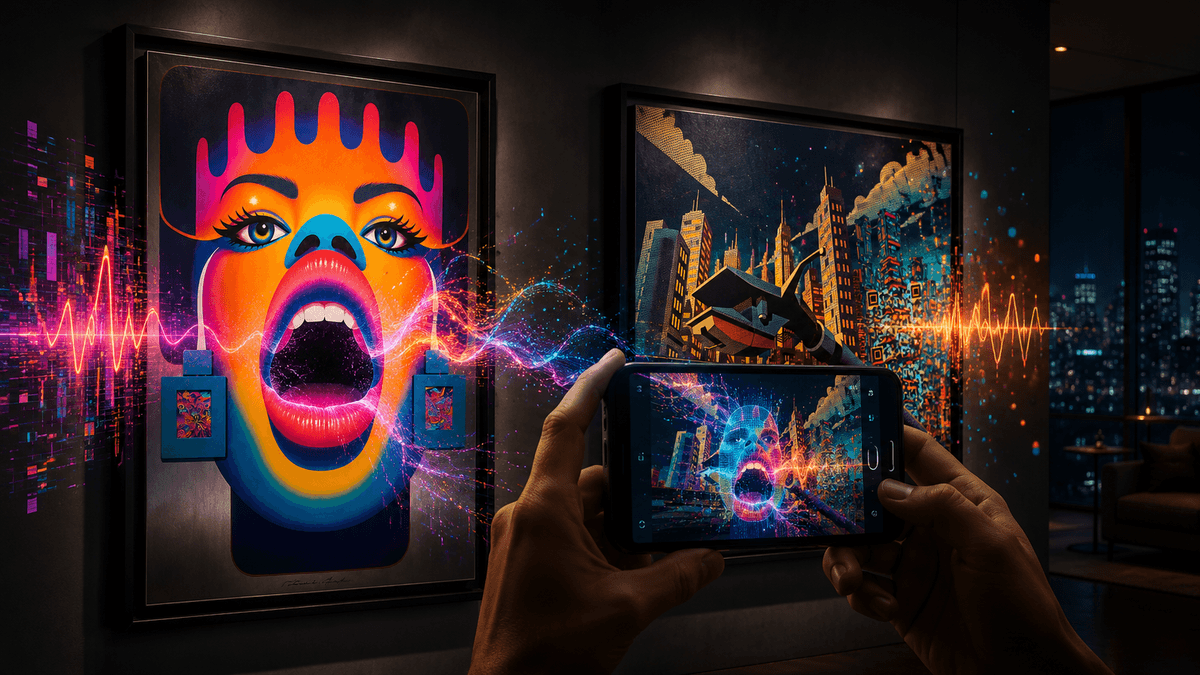
A painting, photograph or metal print can become the entrance to another dimension. Through a smartphone, the collector can discover movement, sound, animation, storytelling or an interactive experience connected to the physical piece.
The artwork remains real. It can still be displayed, touched, collected and preserved. But it also contains a digital layer that changes the way people experience it.
This is not about replacing physical art with technology.
It is about giving physical art another life.
What Is Phygital Art?
The word phygital combines “physical” and “digital.”
A phygital artwork exists simultaneously in two connected forms:
- A physical object, such as a painting, sculpture, photograph or artwork printed on metal.
A digital experience activated through a smartphone or another connected device.
The digital layer may include animation, music, augmented reality, video, three-dimensional elements or interactive content.
The physical artwork can exist independently. The digital experience does not replace it. It reveals something that cannot be seen in the static image alone.
That relationship is essential.
A successful phygital artwork should not feel like a traditional image with a random video added to it. The physical and digital elements must belong to the same artistic concept.
Start With the Artistic Idea, Not the Technology
One of the most common mistakes is to begin by asking:
“What technology should I use?”
The better question is:
“What should the viewer feel or discover?”
Technology is only useful when it strengthens the meaning of the artwork.
Before producing the digital layer, define the experience:
- Should part of the image come alive?
Should a character move or speak?
Should music reveal the atmosphere of the work?
Should the viewer discover a hidden narrative?
Should the experience be surprising, emotional or unsettling?
Should the digital layer change the interpretation of the physical image?
The strongest phygital experiences are not demonstrations of technology. They are extensions of an artistic vision.
A good digital layer should make the viewer understand the physical work differently after experiencing it.
Create a Strong Physical Artwork
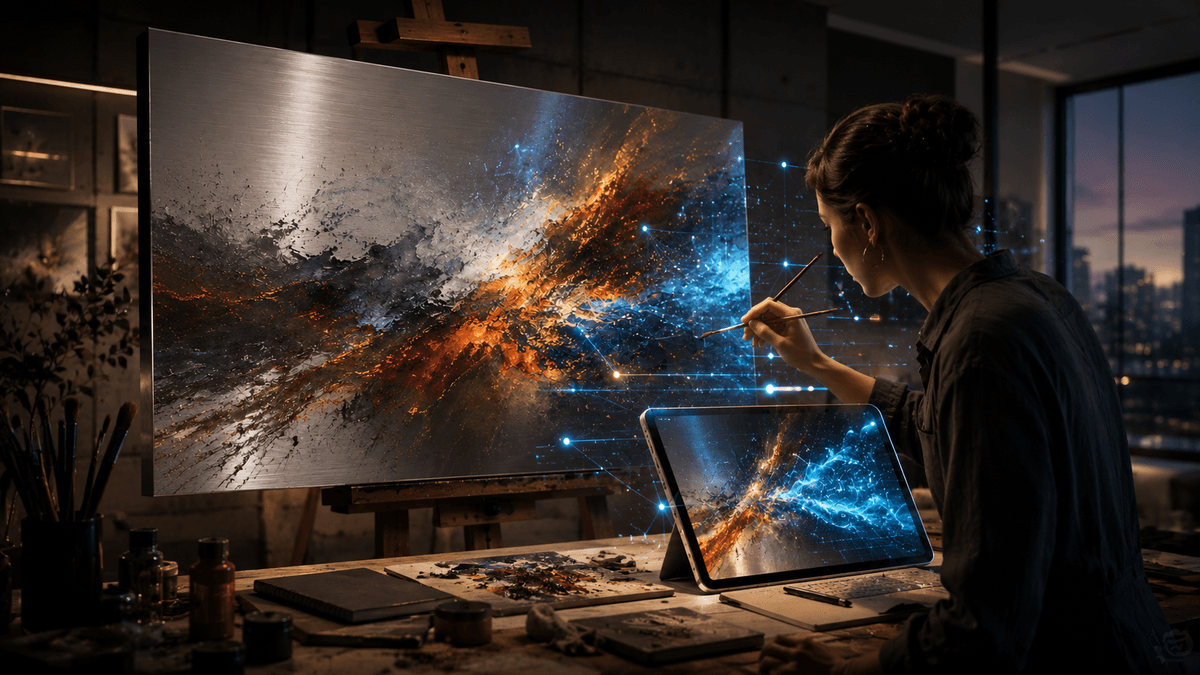
The physical component must remain visually powerful without the digital experience.
This point matters because the collector is still purchasing a real object. The artwork will remain visible on a wall every day, while the digital experience will be activated occasionally.
The physical work therefore needs:
- A strong composition
A distinctive visual identity
Professional production quality
Durable materials
A presentation that fits the intended environment
For my own phygital works, I use premium brushed aluminium because it gives the image depth, luminosity and a contemporary presence.
The material also creates a connection with the technological dimension of the work without making it look like a screen or an electronic device.
The result must first work as art.
The technology comes after.
Design the Digital Extension
Once the physical image is defined, the next stage is deciding what happens when the artwork is activated.
The digital experience can take many forms.
Animation
Elements from the physical artwork can begin to move. A face may change expression. A dancer may leave the composition. A landscape may transform. An apparently static object may reveal an unexpected behaviour.
Animation is particularly effective when the movement feels impossible or hidden inside the original image.
Sound and Music
Sound can completely change the emotional interpretation of an artwork.
Music may evoke a period, a memory or a cultural reference. A voice can reveal a story. Environmental sound can create immersion.
Sound should never feel like background decoration. It must support the identity of the artwork.
Augmented Reality
Augmented reality allows digital elements to appear around, in front of or beyond the physical artwork.
A flat image can become a spatial experience. A character can emerge from the frame. A virtual environment can open behind the surface. Three-dimensional elements can respond to the viewer’s position.
The best augmented reality effects are not necessarily the most complicated. A simple and precise transformation can be more memorable than an overloaded experience.
Interactive Storytelling
The viewer can also be invited to make choices, touch elements, open digital doors or discover different layers of content.
This creates a more active relationship with the artwork.
Instead of simply looking, the viewer becomes part of the experience.
Choose a Simple Activation Method
Access must be immediate.
If the viewer needs to download an application, create an account or follow several technical steps, much of the emotional impact will be lost.
The activation process should feel natural:
- The viewer approaches the artwork.
The viewer uses a smartphone.
The digital layer opens.
The artwork comes alive.
Depending on the project, activation can use:
- Web-based augmented reality
A discreet QR code integrated into the composition
NFC technology
Image recognition
A direct web link
In my work, the experience opens directly through the smartphone browser. No dedicated application is required.
This is important because phygital art should be accessible not only to technology specialists but also to collectors, gallery visitors and people discovering the concept for the first time.
The technology should disappear behind the experience.
Connect the Physical and Digital Layers
Producing a video or animation is not enough. It must be precisely connected to the physical artwork.
The digital content should respect:
- The proportions of the physical piece
The position of the visual elements
The viewer’s distance from the artwork
The lighting conditions
The orientation of the smartphone
The loading speed of the experience
For example, when an animated figure emerges from a physical image, its position must align correctly with the artwork.
When sound begins, the timing must support the visual transformation.
When the digital layer ends, the transition should feel intentional rather than abrupt.
These details create the difference between a technological effect and a professional artistic experience.
Test the Experience in Real Conditions
A phygital artwork should never be tested only on a computer screen.
Test it in the environment where people will actually see it.
Check the experience:
- On different smartphones
With different screen sizes
Using mobile internet as well as Wi-Fi
In bright and low-light environments
From several viewing distances
With the artwork framed or installed
With people who have never used augmented reality
Watch how visitors behave.
Do they understand what to do?
Do they find the activation point?
Does the experience load quickly enough?
Do they remain engaged until the end?
Do they want to show it to someone else?
Real viewers often reveal problems that are invisible during production.
If the experience needs a long explanation, it is probably still too complicated.
Think About the Collector
Phygital art changes the relationship between the collector and the artwork.
The collector does not only own an image. They own access to a specific experience connected to that physical piece.
This creates new questions:
- Will the digital layer remain accessible over time?
Can the content evolve?
Can the experience be transferred if the artwork is resold?
Who maintains the digital files?
What happens if the hosting platform changes?
Is the digital experience exclusive to the physical edition?
These questions should be considered before the work is sold.
The collector needs to understand exactly what is included:
- The physical artwork
The digital experience
The edition number
The certificate of authenticity
The activation method
The conditions of access
Any future updates included with the work
Clear information increases trust and reinforces the value of the artwork.
Does Phygital Art Need Blockchain?
Not necessarily.
Blockchain can be used to record provenance, ownership or the history of an artwork. It can also connect a physical work to a digital certificate or token.
But blockchain is not what makes an artwork phygital.
A physical work connected to an immersive digital experience is already phygital, even without an NFT or cryptocurrency component.
The important question is not whether blockchain is fashionable.
The important question is whether it solves a real problem for the artist and collector.
For some projects, it can offer useful ownership records. For others, a signed certificate, a controlled edition and a reliable digital access system may be more appropriate.
Technology must serve the work, not define it.
How Phygital Art Changes the Viewer’s Experience
Traditional art is often experienced through observation.
Phygital art adds discovery.
At first, the viewer sees a physical artwork. Then something changes. The static composition begins to move. A hidden sound appears. A character escapes from the image. The frame becomes a portal.
This moment creates surprise.
It also produces a powerful social reaction. People naturally want to show the experience to someone standing nearby. The artwork becomes a conversation, not only an object.
For galleries, hotels, private homes, offices and public spaces, this interaction can create a deeper connection between the artwork and its environment.
However, surprise alone is not enough.
The experience must still communicate something meaningful.
A technological trick may attract attention once. A strong artistic concept can remain memorable.
The Future of Phygital Art
Phygital art is not the end of painting, photography or sculpture.
It is an expansion of their possibilities.
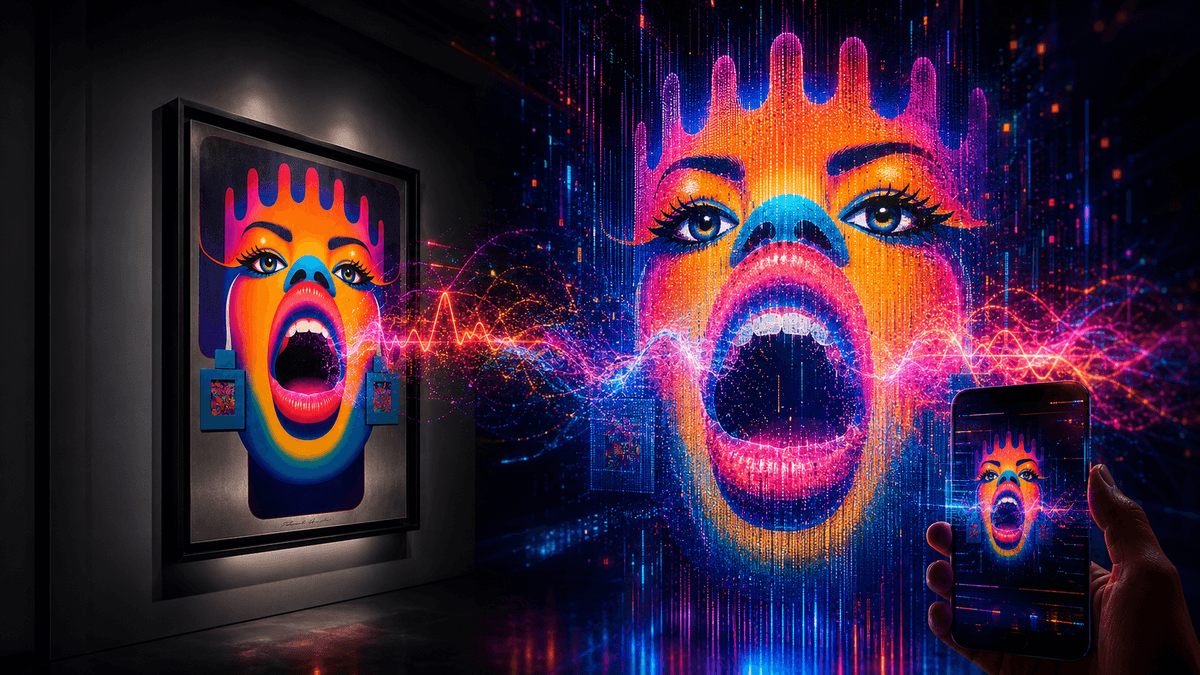
Artists can now connect physical materials with movement, sound, augmented reality and digital storytelling without transforming the artwork into a screen.
Collectors can own an object that remains present in the real world while revealing another dimension through technology.
The future of art will not be exclusively physical or exclusively digital.
It will move between both.
The most interesting question is no longer:
“Is this physical art or digital art?”
It is:
“What becomes possible when the two are created as one?”
Experience Phygital Art
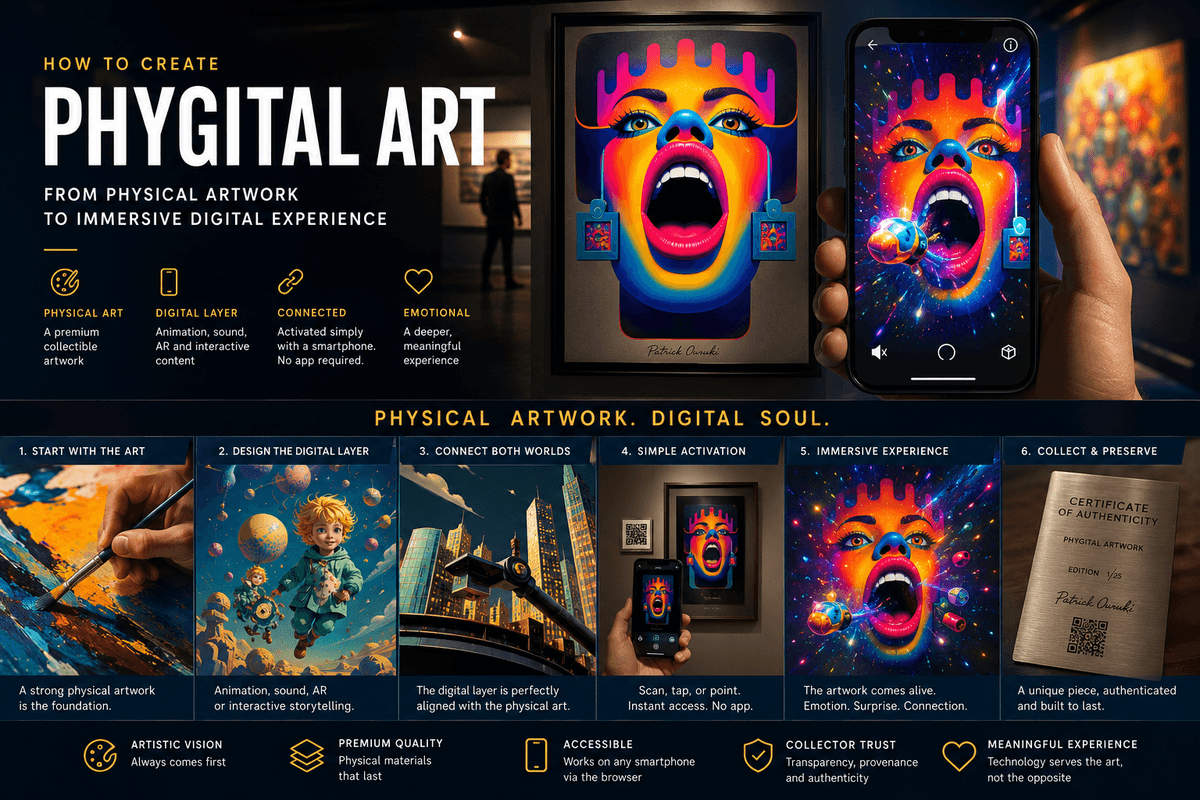
My phygital artworks combine premium physical pieces with animation, sound and augmented reality experiences accessible through a smartphone.
No dedicated app is required.
The artwork remains physical, signed and limited. The digital layer reveals the life hidden inside it.
The image is only the beginning.